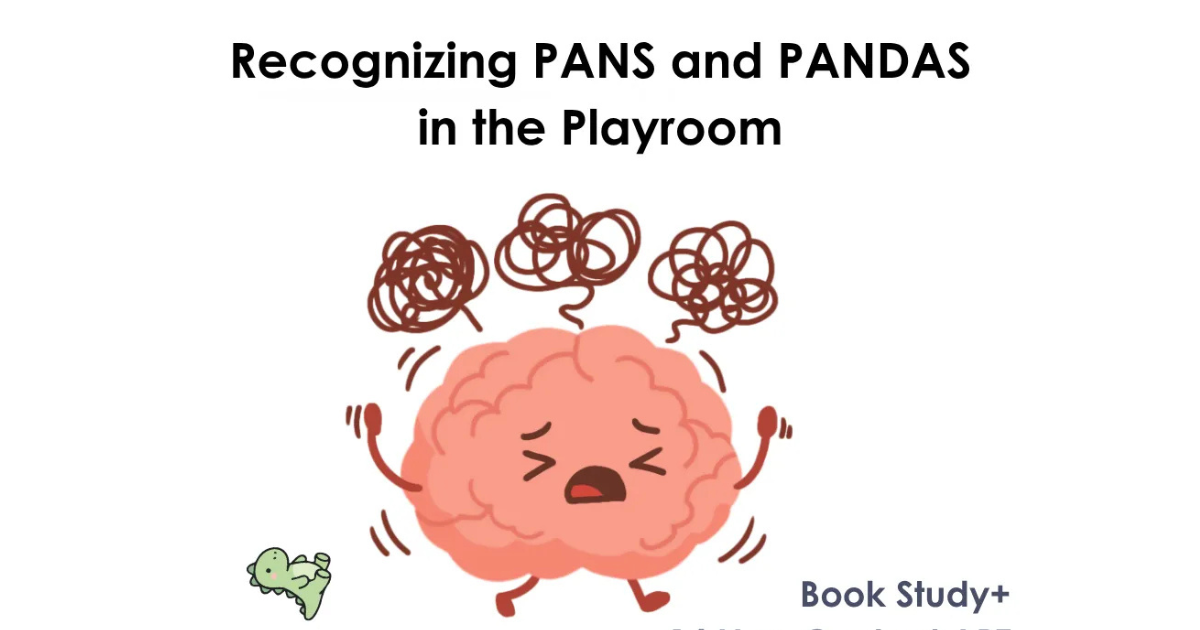
Recognizing PANS and PANDAS in the Playroom
Author: Beth Alison Maloney, Presenter: Gabrielle Anderson, LMFT, RPT-S™
About this training
What is a Book Study Hybrid Course? 📕 Purchase the book Childhood Interrupted, by Beth Alison Maloney 🎓 Earn 14 NBCC/14 APT non-contact CE hours by completing this self-paced home study. 🤓 Participants purchase and read the entire book and complete self reflecting writing prompts in lieu of a long exam ☀️ Additional supplemental material helps bring the concepts to life through case studies, sand tray images, and teaching content from PANS/PANDAS specialist Gabrielle Anderson, LMFT, RPT-S™. What is PANS/PANDAS? Do Any of My Clients Have This? You may have heard of PANDAS, and perhaps even the broader term PANS. But what do these conditions actually look like in the play therapy room and what can you, the play therapist do to help? About the Child Some play therapists work with children whose symptoms feel unusually intense or confusing. A child may develop severe OCD, separation anxiety, emotional dysregulation, rage episodes, or sudden regression that does not respond to typical therapeutic approaches. In PANDAS, symptoms are often described as having an abrupt onset following infection. PANS, while sometimes sudden, may present more broadly as extreme dysregulation and psychiatric symptoms that are difficult to explain. For therapists, this raises important questions. Why did this child change so dramatically? Why are the symptoms so resistant to treatment? Could something medical be interacting with the child’s mental health? For You, Therapist 📚 In the book, Childhood Interrupted, Beth Alison Maloney shares the story of her son’s experience with PANS/PANDAS, offering a window into how these conditions can affect children and families. ✏️ Throughout the electronic writing prompts (in lieu of lengthy exam) you will connect the concepts from the book to play therapy practice, exploring how these symptoms may present in the playroom and how play therapy can support children and their families. 👩🏻💻 Then in a pre-recorded class, listen to Gabrielle Anderson, LMFT, RPT-S™ explain how PANS and PANDAS can disguise themselves in other mental health diagnoses and receive tangible play therapy tools and tips (including sand tray case studies with images) on how to help both the child and the parent cope, heal and build resilience. This training is not designed to teach therapists to diagnose PANS or PANDAS. Instead, it helps clinicians recognize patterns that may warrant curiosity, collaboration with medical providers, and thoughtful therapeutic support. Learning Objectives Narrative case material will be paired with current research to support evidence-informed play therapy practice with children and adolescents experiencing sudden-onset neuropsychiatric symptoms. After completing this training, participants will be able to: 🍎 Differentiate between PANS/PANDAS symptom presentation and at least two commonly assigned mental health diagnoses, and analyze how misdiagnosis may occur within play therapy and broader clinical settings. 🍎 Assess a child’s readiness for cognitive and behavioral interventions by identifying neurological, developmental, and emotional indicators, and select appropriate play therapy or alternative interventions when CBT is not clinically indicated. 🍎 Apply play therapy principles to support parents of children with PANS/PANDAS by identifying strategies that reduce caregiver blame, increase validation, and strengthen parent–therapist collaboration. 🍎 Evaluate systemic and professional barriers that limit awareness of PANS/PANDAS within the mental health field and formulate strategies to improve interdisciplinary understanding and advocacy within play therapy practice. 🍎 Develop school-based support recommendations by identifying appropriate IEP and 504 accommodations for children with PANS/PANDAS, and integrate play therapy-informed collaboration strategies when working with educators. 🍎 Observe and interpret clinical case materia
CE credits: 14 · Non-Contact APT, NBCC