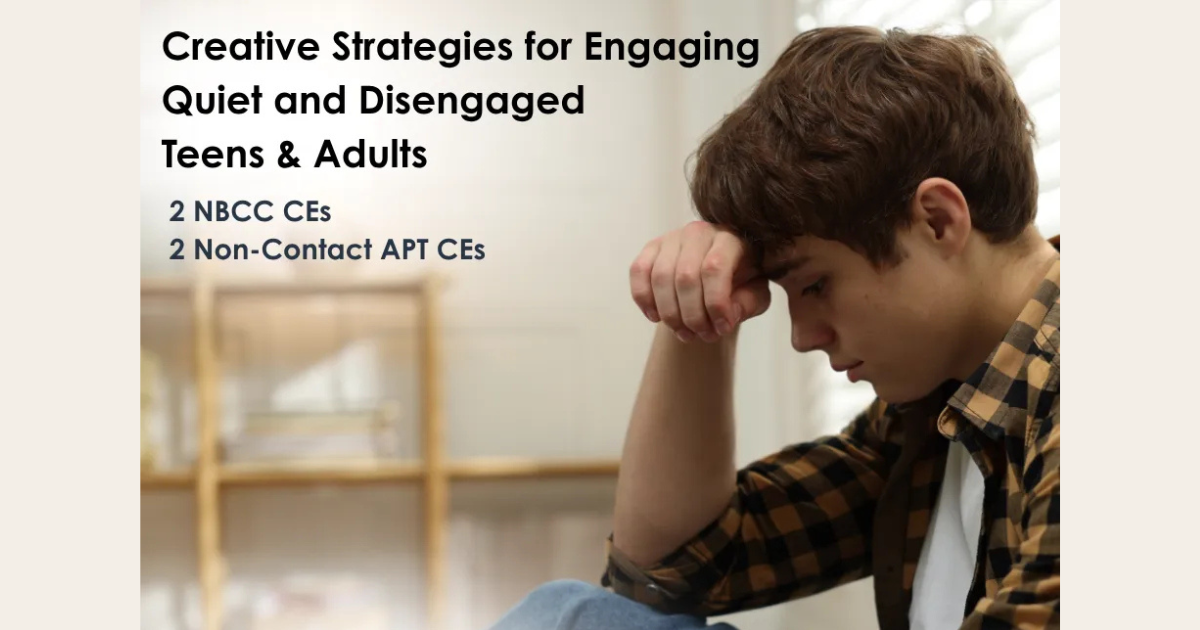
Creative Strategies for Engaging Quiet and Disengaged Teens & Adults
Gabrielle Anderson, LMFT, RPT-S™
About this training
A Fresh Take on Creative Trauma Informed Work with Tweens, Teens & Adults You know the helplessness and awkwardness of sitting with a quiet, shut down and disengaged client. Developing trust and safety is a must ... but then what? Often clients who have expereinced trauma will go into a silent protection mode that can feel hard for even a seasoned thereapist to engage. How do we reach them and move safely into the trauma when they struggle to even talk about it? How Can This Training Help You? When words are no longer enough, therapists need another doorway. This training will introduce you to creative, image-based approaches that help clients safely access traumatic experiences without relying solely on conversation. By engaging the right brain through images, symbols, and creativity, clients often remain more regulated, more present, and better able to process what once felt overwhelming. Through demonstrations, case examples, and experiential activities, you will learn how to use: ☀️ Image-rich therapy card decks ☀️ Guided visualization ☀️ Creative drawing prompts These approaches can be adapted for older children, teens, and adults. If you do not yet have an image-based card deck, we will send recommendations before the training. Experience each activity yourself before thoughtfully adapting it for your own clients. You will leave with practical tools to help clients: ☀️☀️ Access difficult memories without relying solely on words ☀️☀️ Explore trauma through images, symbols, and creativity ☀️☀️ Develop healing narratives while remaining grounded and regulated Learning Objectives By the end of this section, participants will be able to: 🍎 Describe the neurological limitations of talk therapy when working with trauma and identify how play based right-brained approaches support trauma processing in tween, teen and adult clients. 🍎 Demonstrate the use of playful symbolic card prompts to support emotional expression and identity work in clients from tweens through adulthood 🍎 Facilitate a guided visualization or meditation aimed at increasing client regulation and internal connection. 🍎 Apply art-driven interventions to help clients externalize and process trauma-related material without relying on verbal insight. 🍎 Explain the role of play therapy principles in trauma treatment for tweens, teens and adults, including the therapeutic use of metaphor and symbol. 🍎 Evaluate how experiential tools can support the therapist’s own regulation, presence, and clinical effectiveness when working with shutdown or emotionally guarded clients.
CE credits: 2 · Non-Contact APT, NBCC